
Australia's Best Rehab Centers: Where to Get Help Nationwide

Searching for the best rehab centers Australia has to offer can quickly become confusing. Facilities use different definitions of residential care, detox, rehabilitation and wellness support, while costs and insurance eligibility can vary substantially. A centre that is right for one person may be unsuitable for someone who needs hospital-based withdrawal management, treatment for a co-occurring mental health condition or an affordable long-term program.
This guide provides a practical shortlist rather than declaring one centre the universal winner. It profiles Australian facilities that can be compared by location, treatment setting and specialty, including Rehab Explore listings such as HARP Private Rehab, Seahaven Private, Byron Private, The Sydney Retreat, Gunnebah Addiction Retreat and Cedarvale Health and Lifestyle Retreat. We also include selected services in states where treatment options can be harder to compare online.
Facility information was reviewed in July 2026, but availability, admission criteria, fees and insurance arrangements can change. Contact the admissions team directly and ask for written confirmation before paying a deposit or arranging travel.
Read more: What Is Rehab?
Why location matters when choosing a rehab in Australia
Location affects much more than scenery. Staying close to home can make family sessions, discharge planning and ongoing appointments easier. Travelling to a regional or interstate centre may provide greater privacy and useful distance from familiar triggers, but it can also complicate transport, family involvement and the transition back into everyday life. Australian Government guidance notes that people need different levels of support, ranging from community-based care to residential rehabilitation, so the safest choice should begin with clinical need rather than destination. Read more: Choosing Rehab Abroad
Local metropolitan care
- Easier access to family sessions and existing doctors
- More practical for day programs and step-down care
- Everyday triggers may remain geographically close
Regional care
- Physical separation from routines associated with substance use
- Often offers quieter, nature-based surroundings
- Transport and family visits may require more planning
Interstate care
- Can offer privacy or access to a particular clinical specialty
- May suit people whose preferred program is unavailable locally
- Requires a clear plan for travel, medication and aftercare at home
Do not travel to rehab before checking your detox needs
Some residential centres do not provide medical withdrawal management. Healthdirect advises speaking with a doctor or alcohol and other drug service before stopping alcohol, benzodiazepines, opioids or other dependent substances because severe withdrawal can involve confusion, psychosis or seizures. If someone is unresponsive, having difficulty breathing or experiencing a suspected overdose, call 000 immediately.
Best rehabs in Victoria (Melbourne & regional)
Victoria offers a mix of private residential programs, outpatient support and regional retreat settings. The options below illustrate why comparing top rehab clinics Australia-wide requires looking beyond accommodation. HARP is oriented towards private, highly individualised residential treatment, while Seahaven offers several program lengths in Melbourne's south-east. Cedarvale is better understood as a lifestyle and wellbeing retreat than as a substitute for medically supervised addiction treatment.
Selected Victoria treatment and recovery options
| Facility | Location and setting | Program focus | Important fit considerations |
|---|---|---|---|
| HARP Private Rehab | Dandenong Ranges, approximately 45 minutes from central Melbourne | Private residential addiction and mental health treatment using CBT, DBT, trauma-informed care, counselling and complementary therapies | Residential stays are assessed individually and may range from 20 to 90 days. HARP states that it coordinates external medical detox when required rather than providing detox directly. |
| Seahaven Private | Carrum in Melbourne's south-eastern suburbs, close to the coast | Residential addiction support, a two-week intensive day option, an evening program and family support | Residential options include 28, 56 and 84 days. Seahaven states that it is not a hospital or medical facility and its programs are not eligible for private health insurance rebates. |
| Cedarvale Health and Lifestyle Retreat | Narbethong in the Yarra Ranges | Lifestyle education, stress management, nutrition, exercise, rest and support with reducing alcohol and caffeine use | Cedarvale offers four-, five- and 12-night wellbeing programs. Confirm whether its scope is appropriate if you need addiction therapy, psychiatric care, medication management or detox. |
HARP may appeal to people seeking privacy, flexible program length and treatment that addresses addiction alongside trauma or mental health concerns. Seahaven may be worth comparing when a person wants a clearly structured residential duration or needs an intensive non-residential option. Cedarvale may support broader lifestyle change, but a health retreat should not be treated as equivalent to an addiction hospital or clinical residential program. Ask each admissions team who provides medical oversight, what happens if withdrawal symptoms develop and how existing prescriptions are managed.
Best rehabs in New South Wales (Sydney & Byron Bay)
New South Wales includes city-based peer recovery programs, clinically supported hinterland facilities and rural retreat models. The right option depends on whether you need psychiatric involvement, individual psychotherapy, a mutual-help approach, longer residential structure or straightforward access from Sydney. Gunnebah is often described as a Gold Coast-area service, but its residential property is in Nobbys Creek, New South Wales.
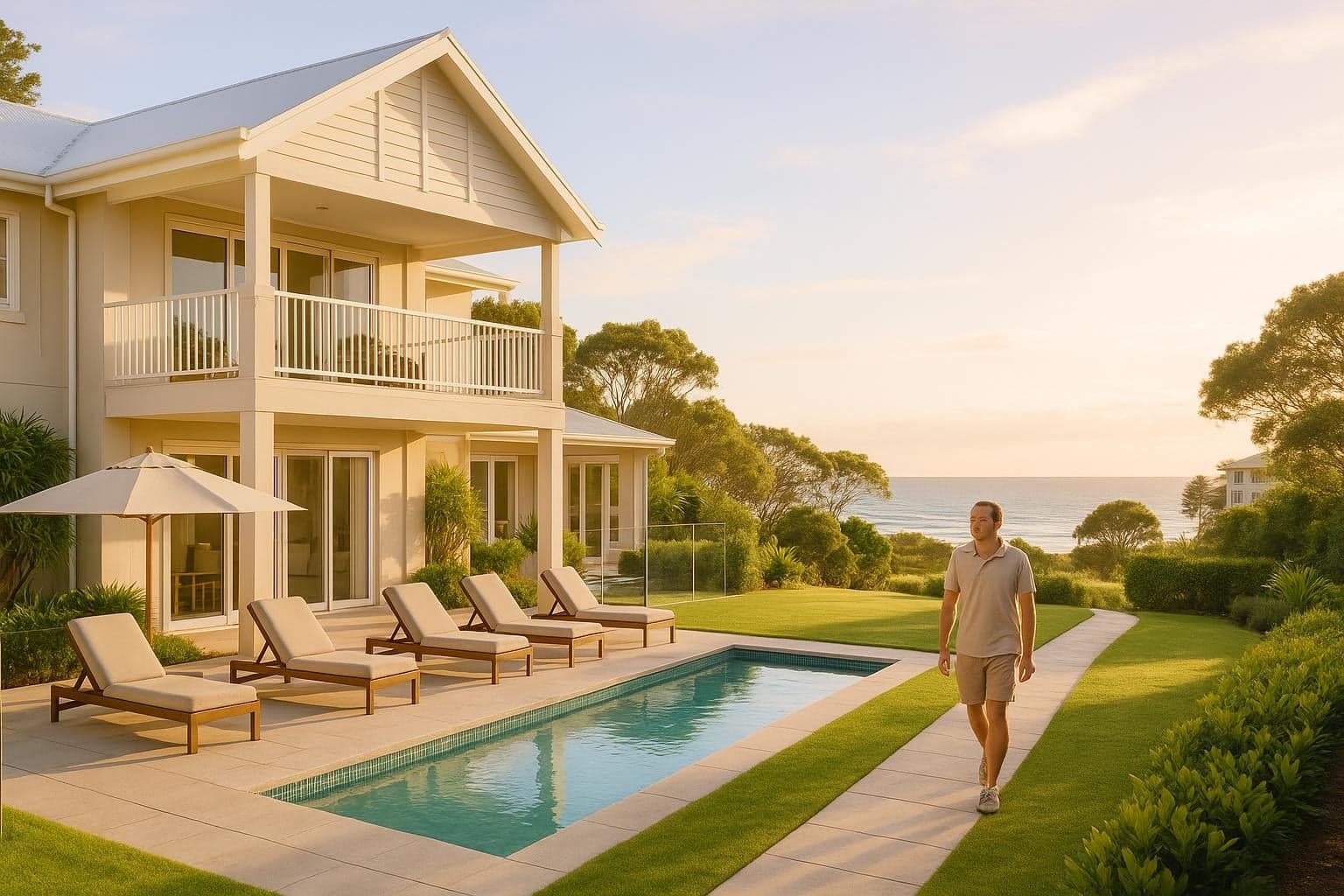
Selected New South Wales residential rehabs
| Facility | Location | Approach and specialty | Practical details |
|---|---|---|---|
| Byron Private | Myocum in the Byron Bay hinterland | Community-based residential support for substance use, anxiety, depression, trauma, PTSD and other mental health concerns | The centre describes a small, personalised program supported by a multidisciplinary team. Intake screening determines whether community-based residential care is suitable; acute hospital care and immediate crisis treatment are outside its scope. |
| The Sydney Retreat | Stanmore, inner-west Sydney | Non-clinical, peer-supported residential recovery grounded in Twelve Step Facilitation | The residential stay is 28 days. The organisation is a registered charity and also offers family sessions, recovery maintenance support and sober-living pathways. Its published fee is self-funded and cannot be claimed through private health insurance. |
| Gunnebah Addiction Retreat | Nobbys Creek in northern NSW, around an hour from the Gold Coast | Private residential drug and alcohol treatment incorporating CBT, group therapy, physical wellbeing, life skills and relapse-prevention work | Guests stay in private bedrooms within shared bungalow accommodation. The centre advertises withdrawal support, but applicants should clarify whether their expected withdrawal requires a medical detox service before arrival. |
Byron Private may be a stronger candidate when substance use is closely connected with trauma or another mental health presentation and the person is clinically suitable for a non-acute community setting. The Sydney Retreat offers a distinct peer-led model for adults prepared to engage with Twelve Step principles. Gunnebah may suit someone seeking a structured rural environment within reach of the Gold Coast and northern New South Wales. If location is the main attraction, pause and compare clinical suitability, staff credentials and emergency procedures before considering scenery or amenities.
Best rehabs in Queensland
Queensland has residential options around Brisbane and the Sunshine Coast as well as outpatient services in major population centres. Among the better-documented private options are The Banyans and Palladium Private. Both support mental health and substance use concerns, but their delivery models differ: The Banyans emphasises individually scheduled one-to-one care, while Palladium uses a modified therapeutic community with individual therapy alongside structured group participation.
Selected Queensland residential treatment options
| Facility | Setting | Treatment model | Funding and continuity |
|---|---|---|---|
| The Banyans | Private residence in the Brisbane hinterland, with day programs in Bowen Hills | Individualised residential treatment delivered through medical, psychiatric, psychological, nutritional and physical-health disciplines; therapy is provided one-to-one rather than through group treatment | The centre reports NSQHS accreditation, 24-hour registered nursing and aftercare for up to two years. Residential care is primarily private, with insurance contributions dependent on the service and policy. |
| Palladium Private | Sunshine Coast hinterland near the Glass House Mountains | Approximately four-week residential program using a modified therapeutic community model, appointed individual therapists and structured support for mental health and substance use | The program is advertised as self-funded and NSQHS accredited. Applicants should discuss detox requirements, current fees and suitability during intake. |
For people comparing the best rehabs in Australia for privacy and concentrated individual appointments, The Banyans' one-to-one structure may be relevant. Palladium may suit someone comfortable working within a therapeutic community and seeking a defined program of approximately four weeks. Neither model is automatically better: group participation can build connection and accountability, while intensive individual care may suit people with complex, private or executive circumstances. Ask how much weekly contact you will actually receive from psychologists, psychiatrists, doctors and addiction practitioners rather than relying on general references to a multidisciplinary team.
Best rehabs in Western Australia & South Australia
Western Australia and South Australia have fewer highly visible private retreat-style facilities than the eastern states, but both have government-funded and not-for-profit residential services. These programs may use longer therapeutic-community or reintegration models and can have narrower eligibility requirements. Contacting the relevant state alcohol and drug service can help identify current vacancies and appropriate withdrawal pathways.
Selected residential programs in Western Australia and South Australia
| Facility | Region and eligibility | Program characteristics | Questions to ask |
|---|---|---|---|
| Hope Springs Rehabilitation Centre | Near Walkaway, approximately 40 kilometres from Geraldton in Western Australia's Midwest; mixed-gender service for adults | Long-term therapeutic community and residential rehabilitation for up to 22 adults, delivered in a rural setting | Ask about program duration, referral steps, wait times, fees, transport from Perth and the required detox status before admission. |
| Back on Track Adelaide Residential AOD Recovery Centre | Underdale, Adelaide; accepts Aboriginal and non-Aboriginal adults from across South Australia | Twenty-bed, 24-hour residential service offering case planning, individual counselling, group therapy, cultural activities, peer mentoring and life-skills work | Confirm current eligibility, referral documentation, cultural supports, waiting times and whether withdrawal management must be completed elsewhere. |
These services are not direct equivalents to short private retreats. Hope Springs is designed around a long-term therapeutic-community environment, while Back on Track combines residential recovery with case management, peer support and cultural activities. People in Perth can also use the Western Australian Mental Health Commission's residential treatment directory, while South Australians can contact local alcohol and drug services for detox, counselling and rehabilitation pathways. If travelling east for private care, include the cost and logistics of returning for follow-up treatment in your decision.
What to check before choosing any Australian facility
A polished website does not tell you whether a facility can manage your clinical needs. Australia's National Quality Framework for Drug and Alcohol Treatment Services establishes quality expectations for treatment providers, while the Australian Commission on Safety and Quality in Health Care explains that accreditation involves independent assessment against recognised standards. Hospitals must meet applicable NSQHS requirements , but not every community-based or retreat-style provider is a hospital. Ask which exact standard the service holds, who issued the accreditation and when it expires. Read more: How to Choose a Rehab Center: 10 Questions to Ask
Questions to verify with admissions before paying
- Ask whether the facility is a hospital, a licensed health service, a community-based residential program or a non-clinical recovery residence.
- Request the name, registration and role of the doctors, nurses, psychologists, psychiatrists, counsellors and alcohol and other drug practitioners who will be involved in your care.
- Confirm whether medical detox is available on site, coordinated through a hospital or required before admission.
- Provide an accurate list of substances, prescribed medicines, mental health diagnoses and previous withdrawal complications during the clinical assessment.
- Ask for the total written price, including assessments, medication, pathology, transport, specialist appointments, extended stays and cancellation charges.
- Check the exact accreditation standard, accrediting body, certificate dates and whether accreditation applies to the specific location you will attend.
- Ask your health insurer to confirm the facility, program and proposed admission in writing rather than relying only on an admissions team's estimate.
- Request a sample weekly schedule showing the frequency of individual therapy, group work, medical reviews, family sessions and unstructured time.
- Ask what happens after discharge, including relapse-response planning, local clinician referrals, telehealth, peer support and family involvement.
- Confirm how the centre handles medical emergencies, suicidal thoughts, acute psychiatric symptoms, relapse during admission and involuntary discharge.
Healthdirect states that some Australian treatment is free, some services charge a co-payment and private centres generally set their own fees. Medicare may contribute to eligible medical or mental health appointments, but it should not be assumed to pay for private residential accommodation or an entire non-hospital program. Under Better Access, eligible patients with an appropriate plan or referral may claim Medicare benefits for up to 10 individual and 10 group mental health treatment services per calendar year. Private hospital policies include in-hospital psychiatric treatment, which can cover treatment for addiction or behavioural disorders, but benefits depend on the policy, facility status and waiting periods. The maximum waiting period for psychiatric care and rehabilitation is generally two months, and a once-only mental health waiting-period exemption may apply when upgrading certain hospital cover. Always verify your personal circumstances with Medicare, your insurer and the facility. Read more: Does Insurance Cover Rehab?
How Rehab Explore verifies every listed facility
Rehab Explore treats verification as a factual screening process, not an endorsement or guarantee of outcomes. We review a centre's official information, location, program type, stated clinical scope and contact details. Where a provider claims accreditation, hospital status, insurance access or professional registration, those details are checked against the relevant accrediting, regulatory or government information where publicly available. Read more: Levels of Care in Addiction Treatment
- We distinguish medical detox and hospital treatment from non-medical residential rehabilitation, sober living and general wellness retreats.
- We check whether a facility's advertised conditions, age requirements and exclusions are clearly described.
- We compare program-length, aftercare, accommodation and funding claims with the provider's current published information.
- We avoid ranking facilities solely by luxury features, testimonials or self-reported success rates.
- We flag details that require direct confirmation, including current availability, final fees, insurance rebates and medication policies.
- We review listings periodically and update or remove information when a service closes, relocates or materially changes its program.
A verified listing means that readers have a clearer foundation for comparison; it does not replace an individual assessment by a doctor or treatment team. Before admission, speak openly with the facility about withdrawal risk, physical health, pregnancy, prescribed medication, suicidal thoughts and previous treatment experiences. The safest placement is the service capable of meeting your current needs, even if it is not the closest, most luxurious or most widely advertised option. Read more: How to Help a Loved One Get Into Rehab
Explore Rehabs by Location
Related Reading
Frequently Asked Questions
Sometimes, but coverage depends on the service and your policy. Medicare may rebate eligible GP, psychiatrist, psychologist and allied mental health appointments. Under Better Access, eligible people may receive benefits for up to 10 individual and 10 group mental health treatment services per calendar year. Medicare does not automatically pay for accommodation and the full cost of a private, non-hospital residential program. Private hospital insurance may cover eligible in-hospital psychiatric treatment for addiction, subject to the facility, level of cover, waiting periods, excesses and other out-of-pocket costs. Some private residential centres are self-funded and receive no insurance rebates. Ask the centre for itemised fees and obtain written confirmation directly from your insurer before admission.
Related Articles
What to Pack for Rehab: Complete Checklist
Preparing for residential treatment can feel overwhelming, especially when different programs have different rules. A simple rehab packing list can make admission day calmer and he…
Sober Living Homes: What They Are & How to Choose One
A sober living home is a substance-free shared residence where people can build stability, routines, and supportive relationships during recovery. It can provide a practical bridge…
How to Stage an Intervention: Step-by-Step Guide
When someone you care about is living with addiction, it is natural to want one conversation that changes everything. An intervention can create an opportunity to accept help, but…