
Withdrawal Symptoms & Timelines by Substance
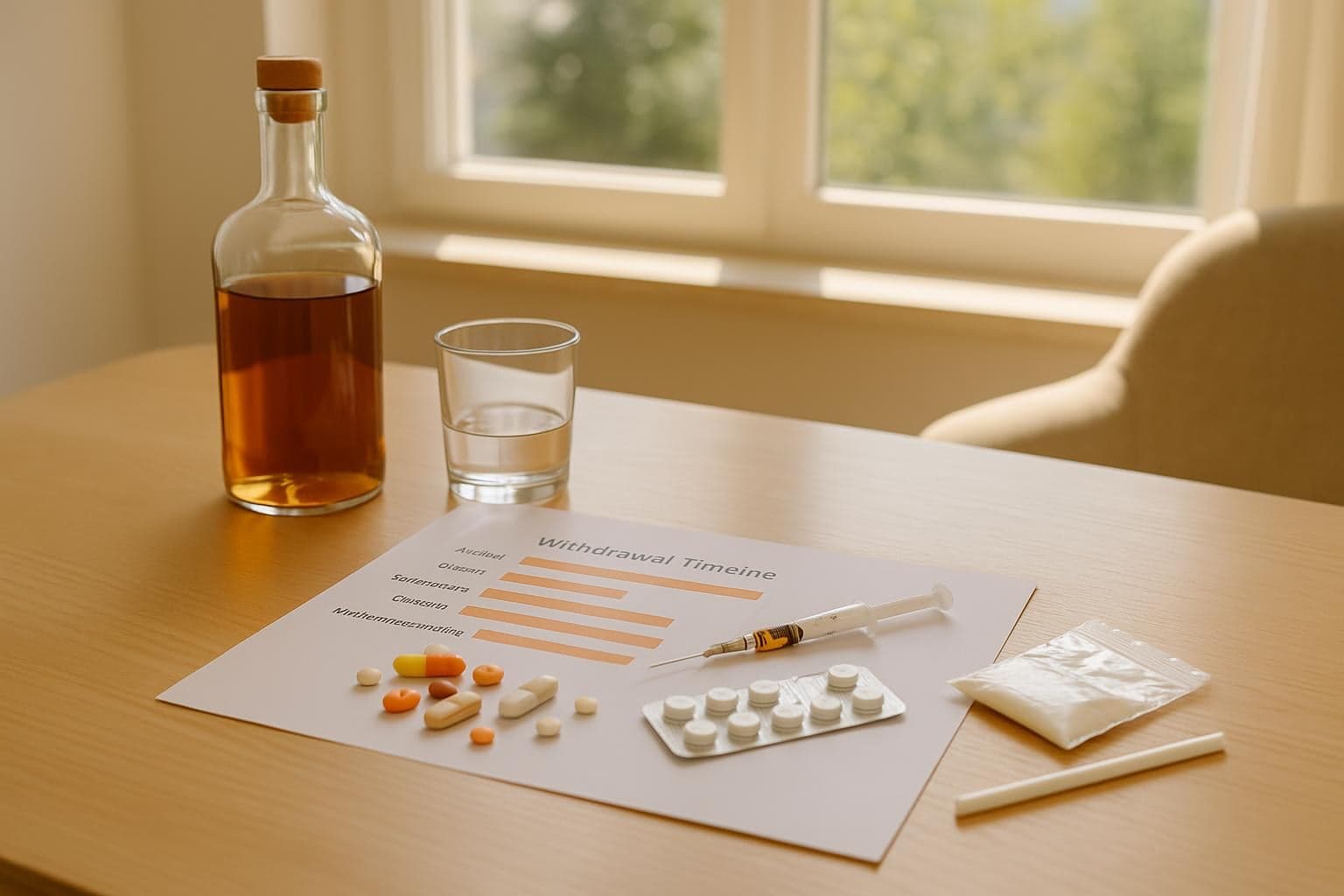
A withdrawal timeline estimates when symptoms may begin, become most intense and start to ease after someone reduces or stops a substance. It is a planning tool rather than a countdown: the exact course depends on the substance, dose, formulation, frequency and duration of use, as well as the person’s health and use of other drugs or medications.
Some withdrawal syndromes are mainly uncomfortable, while others can become life-threatening. Alcohol and benzodiazepine withdrawal can cause seizures or delirium, and stimulant withdrawal may involve severe depression or psychosis. Opioid withdrawal is not usually fatal by itself, but vomiting, diarrhoea, pregnancy, other health conditions and the overdose risk associated with reduced tolerance require careful attention.
Anyone who may be physically dependent on alcohol, benzodiazepines or another substance should speak with a doctor or treatment centre’s clinical or admissions team before stopping. A professional assessment can identify the appropriate setting within the Levels of Care in Addiction Treatment: Detox to Aftercare.
Why withdrawal timelines matter for safety planning
Knowing the likely onset and peak of withdrawal helps people arrange clinical monitoring, transport, childcare, time away from work and a safer environment before symptoms intensify. It also helps clinicians distinguish an expected symptom from a possible emergency or unrelated medical problem. Withdrawal management may be the first part of What Is Rehab? A Complete Guide to Addiction Treatment, but it does not by itself address the psychological, behavioural and social factors involved in addiction.
Typical acute withdrawal timelines after the last use or a major dose reduction
| Substance | Typical onset | Most intense period | Typical acute course |
|---|---|---|---|
| Alcohol | About 6–24 hours | Often 36–72 hours | Commonly 2–10 days; withdrawal delirium may begin around 72–96 hours |
| Short-acting opioids such as heroin | About 8–24 hours | Usually 36–72 hours | Approximately 4–10 days |
| Long-acting opioids such as methadone | About 12–48 hours, sometimes later | Often around days 4–6 | Approximately 10–20 days; some symptoms may last longer |
| Short-acting benzodiazepines | About 1–2 days | Variable and may fluctuate | Often 2–4 weeks or longer |
| Long-acting benzodiazepines | About 2–7 days | Delayed and variable | Often 2–8 weeks or longer |
| Cocaine or methamphetamine | Within hours to a few days | The first several days | Severe symptoms often last several days; milder symptoms may continue for 1–3 weeks or longer |
These ranges are not guarantees. A long-acting medication can produce a delayed withdrawal timeline, while short-acting substances generally produce earlier symptoms. High doses, prolonged daily use, previous complicated withdrawal, pregnancy, older age, medical illness and use of multiple substances can change the level of risk. An assessment should therefore consider the full pattern of use, not only the time of the last dose. For background on different substance-related conditions, see Types of Addiction: A Complete Guide.
Alcohol withdrawal timeline and danger signs
The alcohol withdrawal timeline can begin after either complete cessation or a substantial reduction in drinking. ASAM reports that early symptoms typically appear within 6–24 hours. These may include shaking, sweating, anxiety, headache, nausea, disturbed sleep, a fast pulse and increased blood pressure. Symptoms often become most intense during the first 36–72 hours, although individual experiences vary and treatment can alter the course.
- 6–24 hours: Tremor, sweating, anxiety, irritability, nausea, headache, insomnia and a rapid heartbeat may emerge.
- 8–48 hours: Withdrawal seizures can occur, with ASAM describing peak seizure activity at around 24 hours.
- 12–48 hours: Visual, auditory or tactile hallucinations may develop. A person can initially remain oriented despite these experiences.
- 36–72 hours: Many uncomplicated symptoms reach their most intense phase during this period.
- 72–96 hours: Alcohol withdrawal delirium may begin. It can involve severe confusion, agitation, fever, heavy sweating, hallucinations and marked changes in pulse or blood pressure, and commonly lasts another two or three days.
Do not attempt high-risk alcohol withdrawal alone
Seizures, severe confusion, hallucinations, fever, extreme agitation or an irregular heartbeat require emergency care. In the United States, call 911; elsewhere, call the local emergency number. Someone who drinks heavily or regularly, has previously experienced a withdrawal seizure or delirium, or is already shaking or sweating as alcohol wears off should obtain urgent clinical advice before stopping.
Past withdrawal seizures or delirium are important predictors of future complicated withdrawal. Risk also increases when alcohol withdrawal occurs alongside benzodiazepine dependence, active psychiatric symptoms or a destabilising medical condition. A clinical team may recommend outpatient monitoring, residential withdrawal management or hospital care after reviewing these factors. When comparing settings, the questions in How to Choose a Rehab Center: 10 Questions to Ask can help clarify medical staffing and emergency procedures.
Opioid withdrawal timeline
The opioid withdrawal timeline depends heavily on how long the opioid remains active. With short-acting opioids such as heroin, symptoms often begin within 8–24 hours, peak at approximately 36–72 hours and improve substantially within 4–10 days. Long-acting opioids such as methadone can produce a later and longer course: onset may occur 12–48 hours after the last dose, the peak may not arrive until days 4–6, and the acute syndrome can continue for 10–20 days. Buprenorphine withdrawal may also be delayed and can include milder symptoms lasting several weeks.

- Early symptoms: Yawning, watery eyes, runny nose, sweating, restlessness, anxiety and insomnia.
- Developing symptoms: Dilated pupils, gooseflesh, muscle and joint aches, abdominal cramps and stronger cravings.
- Peak symptoms: Nausea, vomiting, diarrhoea, chills, marked restlessness and increased pulse or blood pressure.
- Later symptoms: Sleep disruption, low mood, anxiety and cravings may persist after the most obvious physical symptoms ease.
Opioid withdrawal is generally not life-threatening in an otherwise healthy adult, but severe fluid loss, pregnancy and co-occurring medical or psychiatric conditions may make it unsafe without supervision. Medication can reduce withdrawal symptoms and support ongoing treatment for opioid use disorder, but timing matters because incorrectly timed buprenorphine or naltrexone can precipitate withdrawal. Medication decisions should be made with a qualified clinician rather than attempted with borrowed or unverified drugs.
Overdose risk rises after tolerance falls
A person can lose opioid tolerance during withdrawal or abstinence. Returning to a previously used dose can then cause a fatal overdose. Keep naloxone available where possible, avoid using alone and treat unresponsiveness, slow or shallow breathing, choking or gurgling sounds, and blue or grey lips or nails as an overdose. Give naloxone if available and call emergency services immediately.
Withdrawal management alone is not considered adequate treatment for opioid use disorder because returning to opioid use and overdose remain possible after detoxification. Ongoing medication treatment, counselling and recovery support can be discussed as part of a broader care plan. These services may be delivered across several settings described in Levels of Care in Addiction Treatment: Detox to Aftercare and Types of Therapy Used in Addiction Treatment.
Benzodiazepine withdrawal timeline and danger signs
Benzodiazepines include medications such as alprazolam, lorazepam, clonazepam and diazepam. Their withdrawal timeline differs considerably because some leave the body much faster than others. Guidance published through the World Health Organization’s clinical resources describes onset at about 1–2 days for short-acting benzodiazepines, with symptoms potentially continuing for 2–4 weeks or longer. Withdrawal from long-acting benzodiazepines may not begin for 2–7 days and can continue for 2–8 weeks or longer.
Symptoms may include anxiety, panic, insomnia, irritability, sweating, headache, nausea, palpitations, tremor, muscle pain, sensory sensitivity and difficulty concentrating. Unlike many acute withdrawal syndromes, benzodiazepine symptoms can fluctuate rather than improving steadily each day. Some people experience prolonged symptoms, while others have a shorter and milder course.
Abrupt benzodiazepine discontinuation can be dangerous
The 2025 joint guideline led by ASAM states that people who are likely to be physically dependent should not abruptly stop benzodiazepines. Sudden cessation or rapid dose reduction can cause seizures, delirium, psychosis and other potentially life-threatening complications, particularly after regular, high-dose or long-term use. Contact the prescribing clinician or an addiction medicine service before changing the dose.
There is no single taper schedule that is safe for everyone. The medication used, current dose, duration of treatment, previous taper attempts, seizure history and other prescriptions all affect planning. Severe or complicated withdrawal should be managed in an inpatient or medically managed residential setting with vital-sign monitoring and assessment of seizure risk. Because a gradual taper may extend beyond an initial detox stay, ask how continuing care fits into the expected How Long Does Rehab Take? 30/60/90-Day Guide.
Stimulant (meth/cocaine) withdrawal timeline
Stimulant withdrawal after cocaine, methamphetamine or other amphetamine use is often dominated by changes in energy, sleep and mood rather than the severe autonomic complications associated with alcohol withdrawal. Symptoms can start within hours to days. After a binge, the initial “crash” may involve exhaustion, depressed mood and prolonged sleep for 24–48 hours.
- First 1–3 days: Fatigue, increased sleep, low mood, anxiety, irritability, increased appetite and strong cravings are common.
- Days 3–5: Acute symptoms may remain pronounced, particularly after frequent or high-dose use.
- Weeks 1–3: Less intense fatigue, depression, anxiety, concentration problems, sleep disruption and cravings may continue.
- Longer course: Methamphetamine withdrawal can remain noticeable for 2–4 weeks, while cocaine withdrawal commonly persists for 1–2 weeks. Protracted mood, sleep or craving symptoms can last longer.
Stimulant withdrawal is not usually medically dangerous in the same way as severe alcohol or benzodiazepine withdrawal, but its psychiatric risks can be urgent. SAMHSA notes that suicidal thoughts can occur during the first one or two weeks, and psychotic symptoms related to stimulant use or prolonged sleep loss may continue into withdrawal. Severe depression, suicidal thinking, hallucinations, paranoia or behaviour that could harm the person or others requires immediate professional assessment.
Supportive care commonly focuses on sleep, nutrition, hydration, mental-health monitoring and a plan for managing cravings. After the acute phase, behavioural treatment can address triggers and help establish more stable routines. Residential care is not necessary for everyone, but it may be appropriate when psychiatric symptoms, an unsafe home environment or repeated return to use makes outpatient care insufficient.
When withdrawal requires medical supervision — clear safety callout
Call emergency services now for these symptoms
Seek emergency help for a seizure; severe confusion or delirium; hallucinations with agitation or loss of contact with reality; unconsciousness; slow, shallow or stopped breathing; blue or grey lips; chest pain; an irregular heartbeat; high fever; repeated vomiting or diarrhoea with signs of severe dehydration; suicidal intent; or behaviour that presents an immediate danger. Do not leave an unconscious or severely confused person alone.
Medical supervision does not always mean hospital admission. Depending on risk, it may involve scheduled outpatient reviews, a staffed detoxification programme, residential withdrawal management or inpatient care. An admissions or clinical team should review the substances used, time and amount of the last doses, prescriptions, previous withdrawal experiences, physical health, pregnancy status, mental health and available support.
Arrange a clinical assessment before stopping if any of these apply
- Regular or heavy alcohol use, especially when shaking, sweating or nausea appears between drinks
- Daily or near-daily benzodiazepine use, particularly for longer than one month
- A previous withdrawal seizure, alcohol withdrawal delirium or complicated benzodiazepine withdrawal
- Current hallucinations, confusion, severe agitation, psychosis or suicidal thoughts
- Pregnancy or the possibility of pregnancy
- Use of alcohol, opioids, benzodiazepines or other sedatives in combination
- Significant heart, liver, kidney, neurological or respiratory illness
- Persistent vomiting or diarrhoea, inability to drink fluids or signs of dehydration
- Recent opioid abstinence followed by plans or urges to return to use
- Uncertainty about what a pill or street drug contained
If treatment is recommended, practical considerations such as programme setting, insurance and cost can be addressed after immediate safety needs. Rehab Explore’s guides to Does Insurance Cover Rehab? Complete Guide, How Much Does Rehab Cost? Complete Price Guide 2026 and Inpatient vs Outpatient Rehab Cost Compared explain common planning questions. The safest next step, however, is always a personalised assessment from a doctor or appropriately qualified treatment team.
Explore Rehabs by Location
Related Reading
Frequently Asked Questions
Emergency symptoms include seizures, severe confusion or delirium, hallucinations accompanied by agitation or loss of contact with reality, high fever, an irregular heartbeat, chest pain, unconsciousness, slow or stopped breathing, blue or grey lips, severe dehydration, suicidal intent, or behaviour that may harm the person or someone else. Suspected opioid overdose should be treated immediately with naloxone if available while emergency services are called. In the United States, call 911; elsewhere, use the local emergency number. Alcohol and benzodiazepine withdrawal can become life-threatening even if early symptoms seem mild, so people with regular or heavy use should seek clinical advice before stopping.
Related Articles

Behavioral Addictions: Gambling, Gaming & More
Behavioral addictions involve repeated activities that become difficult to control and continue despite meaningful harm. Gambling is the clearest clinically recognized example, but…

Fentanyl Addiction: What You Need to Know
Fentanyl addiction is a form of opioid use disorder involving one of the most potent opioids in the current drug supply. It can develop after repeated use of illegally made fentany…

Opioid Addiction: Signs, Symptoms & Treatment
Opioid addiction can develop through prescription pain medicines, heroin, illicitly manufactured fentanyl, or other opioids. It is not a moral failing or a lack of willpower. Clini…