
Inpatient vs Outpatient Rehab: Which Is Right for You?
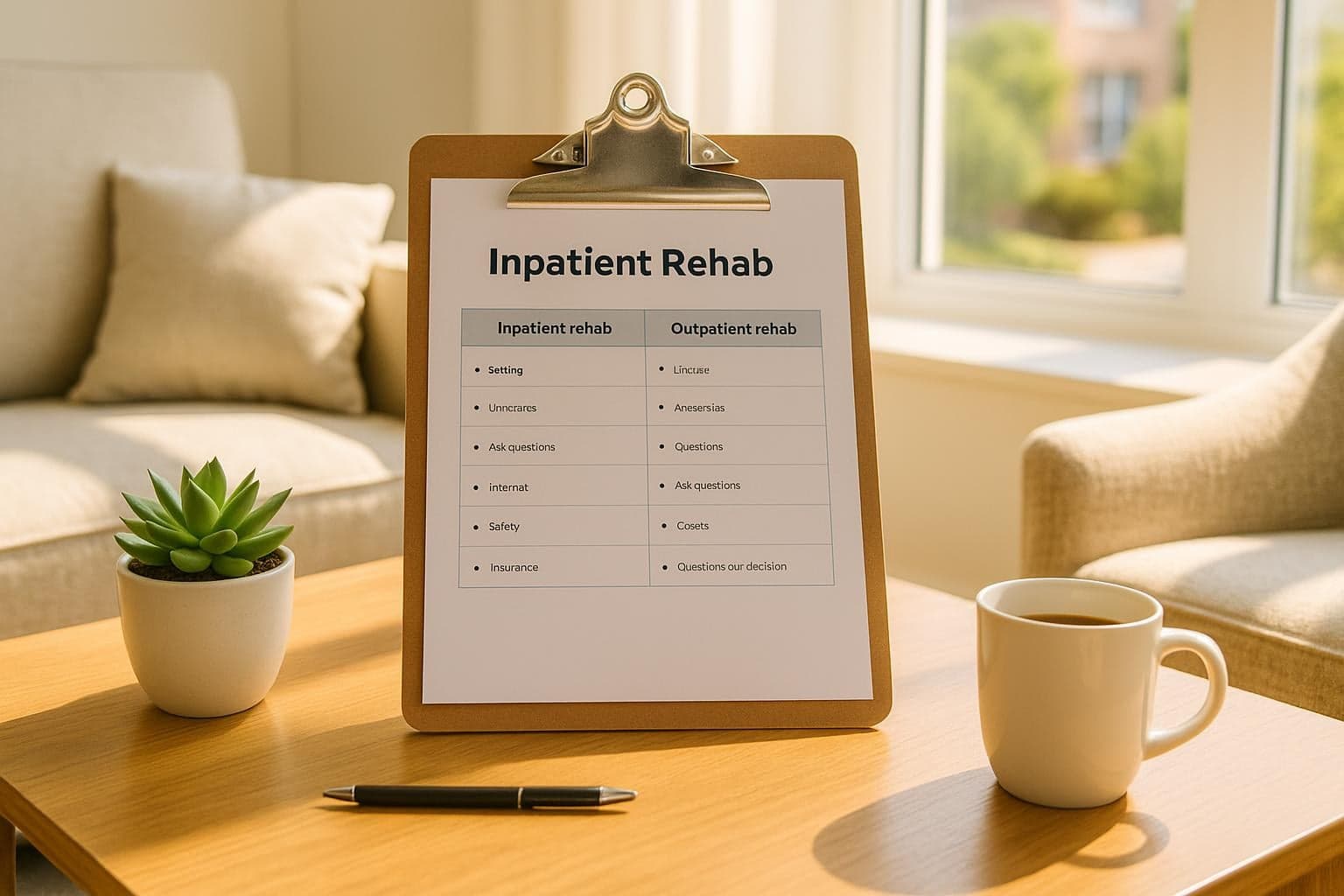
Choosing between inpatient and outpatient rehab is not a test of how serious you are about recovery. It is a clinical and practical decision about which setting can provide enough structure, safety, and support for your current needs.
Inpatient treatment involves staying overnight in a hospital or treatment facility. Residential rehab also provides accommodation and round-the-clock structure, although clinicians may use “inpatient” specifically for hospital-based care and “residential” for non-hospital programs. Outpatient treatment allows you to live at home or in supportive housing while attending scheduled services. If these terms are new to you, our What Is Rehab? A Complete Guide to Addiction Treatment explains how treatment programs fit together.
The right choice depends on factors such as withdrawal risk, physical and mental health, substance use patterns, home stability, previous treatment, daily responsibilities, and access to ongoing care. A professional assessment is the safest way to determine the least intensive setting that can still meet your needs.
Core structural differences
The clearest difference between inpatient and outpatient rehab is where you live during treatment. Inpatient or residential participants stay at the facility, while outpatient participants return home or to another approved living environment after each session. This affects supervision, access to substances, daily routines, family contact, work, and the way recovery skills are practised.
Typical differences between inpatient or residential rehab and outpatient rehab
| Feature | Inpatient or residential rehab | Outpatient rehab |
|---|---|---|
| Living arrangement | You stay overnight at a hospital, treatment centre, or residential facility. | You live at home, in recovery housing, or elsewhere in the community. |
| Clinical access | Staff support is available around the clock, although the level of medical care varies by facility. | Clinical contact occurs during appointments or scheduled program hours, with crisis arrangements varying by provider. |
| Daily structure | Treatment, meals, activities, and rest usually follow a structured timetable. | Treatment is arranged around a schedule that may range from occasional appointments to intensive day programming. |
| Exposure to everyday triggers | The treatment environment temporarily separates you from many home and community triggers. | You continue encountering real-world responsibilities and triggers while receiving support. |
| Work and family commitments | Time away from work, education, caregiving, and home life is usually required. | Many people can continue some responsibilities, depending on program hours and clinical needs. |
| Treatment intensity | Generally offers greater environmental structure and supervision. | Ranges from standard counselling to intensive outpatient and partial hospitalization or day programs. |
| Transition planning | Usually followed by outpatient care, recovery support, or supportive housing. | May serve as the first level of care or as a step-down after inpatient or residential treatment. |
Outpatient is not a single low-intensity option. It can include weekly counselling, medication appointments, intensive outpatient programs, and highly structured day treatment. Likewise, residential programs differ in staffing and medical capability. A retreat-style facility without hospital services is not equivalent to medically managed inpatient care, even if both require an overnight stay.
ASAM describes addiction treatment as a continuum rather than a simple inpatient-versus-outpatient choice. People can move to a more or less intensive setting as risks and needs change. Our Levels of Care in Addiction Treatment: Detox to Aftercare guide explores these transitions in more detail. When comparing residential vs outpatient rehab, ask what services are actually delivered rather than relying on the program label alone.
Who inpatient care is best suited for
Inpatient, hospital-based, or residential care may be appropriate when remaining at home would make treatment unsafe or difficult to sustain. The decision should reflect current clinical risk rather than shame, willpower, or whether someone has reached a particular “rock bottom.” Some people need medical inpatient care; others need a structured residential environment without hospital-level monitoring.

- A clinician expects severe or complicated withdrawal, or you have previously experienced withdrawal seizures, delirium, or other serious complications.
- You have an unstable physical health condition that requires close assessment, nursing care, or rapid access to medical treatment.
- There is an immediate or poorly controlled psychiatric risk, such as suicidal intent, psychosis, severe confusion, or an inability to care for yourself safely.
- Your home environment includes ongoing substance use, violence, exploitation, homelessness, or easy access to drugs or alcohol that you cannot currently manage safely.
- Repeated outpatient attempts have been interrupted by continued use, missed appointments, crises, or a lack of support between sessions.
- Recent overdoses, high-risk opioid use, polysubstance use, or other patterns indicate that closer monitoring and rapid treatment access may be needed.
- You need an integrated program capable of managing substance use alongside significant mental health, cognitive, or medical needs.
Withdrawal management and rehabilitation are related but distinct services. A person may need a short medically supervised withdrawal followed by residential rehab, or they may move directly into outpatient care once medically stable. Review Withdrawal Symptoms & Timelines by Substance for general information, but do not use an online timeline to decide whether withdrawal at home is safe.
Do not attempt high-risk withdrawal alone
Withdrawal from alcohol or benzodiazepines can cause seizures, delirium, and other dangerous complications. Opioid use also carries overdose risks, particularly when tolerance changes. Speak with a doctor or qualified admissions team before stopping suddenly. If someone is having a seizure, is difficult to wake, cannot breathe normally, is severely confused, or may harm themselves or others, contact emergency services immediately.
For opioid-related concerns, ask whether the program provides or continues evidence-based medications for opioid use disorder. SAMHSA warns that disrupting medications such as buprenorphine or methadone can destabilize some patients. This is particularly important when comparing programs for Fentanyl Addiction: What You Need to Know.
Who outpatient care is best suited for
Outpatient care may be a good fit when a clinical assessment finds that you can be treated safely without overnight supervision. It offers flexibility, but successful participation still requires reliable attendance, honest communication about symptoms and substance use, and a plan for managing risk outside program hours.
- Withdrawal is absent, complete, or considered safe to manage in the community with appropriate medical oversight.
- Your physical and mental health are sufficiently stable for you to spend nights outside a treatment facility.
- You have safe housing and at least some protection from violence, coercion, or routine substance use in the home.
- You can travel to appointments, participate through suitable telehealth services, or arrange dependable transport and childcare.
- Work, education, or caregiving responsibilities make residential attendance difficult, and these commitments can be balanced safely with treatment.
- You are able to follow medication instructions and contact the treatment team if symptoms, cravings, or risks increase.
- You are stepping down from inpatient or residential care but still need structured therapy, medication management, or recovery monitoring.
One benefit of outpatient treatment is the opportunity to apply recovery strategies in everyday situations and discuss the results with your clinical team. Programs may provide individual therapy, group work, family sessions, medication management, drug and alcohol testing, case management, and peer support. Available methods vary, so ask how the centre selects and adapts the approaches covered in Types of Therapy Used in Addiction Treatment.
Living at home is not the only outpatient arrangement. ASAM recognises that some people can receive outpatient treatment while living in a recovery residence. This combination may be useful when overnight clinical monitoring is unnecessary but the current home environment is not supportive. Our Sober Living Homes: What They Are & How to Choose One guide explains how recovery housing differs from inpatient treatment.
Outpatient care should not be chosen solely because it causes less disruption. If you regularly miss sessions, cannot remain safe between appointments, or experience worsening substance use or mental health symptoms, tell the clinical team promptly. Moving to a higher level of care is an adjustment to the treatment plan, not a failure.
Cost and insurance differences
Inpatient and residential programs usually cost more than comparable outpatient care because fees may include accommodation, meals, continuous staffing, facility operations, and a fuller daily schedule. However, price alone does not show whether a program is clinically appropriate or good quality. Costs vary substantially by country, location, program intensity, staffing, amenities, medication needs, and length of participation.
Inpatient or residential costs may include
- Accommodation and meals
- Round-the-clock staffing and supervision
- Facility-based medical or nursing services
- Daily clinical and therapeutic programming
- Laboratory tests, medications, and professional fees, which may be billed separately
- Travel, time away from work, and arrangements for dependants
Outpatient costs may include
- Charges per appointment, treatment day, or program period
- Psychiatry, therapy, medication management, and testing
- Prescription medications and pharmacy copayments
- Transport, parking, childcare, or technology for telehealth
- Housing or recovery-residence fees when home is unsuitable
- Lost income when intensive program hours conflict with work
For a more detailed breakdown, see Inpatient vs Outpatient Rehab Cost Compared. The less expensive setting is not necessarily less intensive overall: months of outpatient care, separate professional bills, medication, and recovery housing can add up. Request a written estimate showing what is included, what may be billed separately, and the refund or cancellation policy.
Insurance coverage depends on the healthcare system and individual plan. In the United States, HealthCare.gov states that Marketplace plans cover mental health and substance use disorder services, but specific benefits vary by state and plan. Coverage may depend on medical necessity, network status, prior authorization, deductibles, copayments, and continued clinical review. Parity protections do not guarantee that every facility, requested program, or length of stay will be approved.
Medicare lists inpatient, outpatient, intensive outpatient, and partial hospitalization behavioral health benefits, subject to eligibility and coverage rules. Other public and private plans have different requirements. Review Does Insurance Cover Rehab? Complete Guide and use How to Verify Your Insurance Benefits for Rehab before making a deposit. Ask both the insurer and provider to confirm the approved level of care, network status, expected personal costs, medication coverage, and what happens if further treatment is requested.
A decision framework: self-assessment questions
A self-assessment can help you prepare for a clinical conversation, but it cannot reliably predict withdrawal complications or replace a professional placement assessment. ASAM recommends evaluating multiple areas, including withdrawal and medication needs, physical health, mental and cognitive health, substance-related risks, the recovery environment, and individual preferences and circumstances.
Questions to discuss with a doctor or admissions team
- Could stopping or reducing my substance use cause dangerous withdrawal, and do I need medical withdrawal management before rehabilitation?
- Have I previously experienced seizures, delirium, hallucinations, overdose, severe vomiting, or other complications during withdrawal or recurrence?
- Do I have physical health conditions, pregnancy-related needs, medications, or pain issues that require close medical oversight?
- Am I experiencing suicidal thoughts, psychosis, severe depression, mania, confusion, or another urgent mental health concern?
- Is my home physically and emotionally safe, and can drugs or alcohol be removed or securely managed there?
- Is there a reliable person who can support me without trying to replace professional care?
- Can I consistently attend every session and arrange transport, childcare, work leave, or suitable telehealth access?
- What has happened during previous treatment attempts, and would greater structure address the reasons they ended?
- Does the program provide evidence-based medication when appropriate, including medication for alcohol or opioid use disorder?
- How will the team respond if my withdrawal, substance use, cravings, housing, or mental health worsens?
- What step-down care, recovery support, or housing will be available after the initial program?
- What will insurance cover, what will I pay, and is the proposed setting based on a documented clinical assessment?
You may also find it helpful to complete the reflection prompts in Signs You (or a Loved One) Need Rehab: Self-Assessment. Be candid about the days when things are most difficult, not only how you feel during the assessment appointment. Recent use, overdose history, access to substances, sleep, nutrition, relationships, housing, and safety all help the team understand what support is needed.
Finally, evaluate the provider as carefully as the setting. Ask about licensing or accreditation, staff qualifications, medical coverage, emergency procedures, medication policies, treatment planning, family involvement, and discharge support. How to Choose a Rehab Center: 10 Questions to Ask provides a fuller verification list.
The decision can change over time
Treatment placement is not permanent. You may begin in inpatient care and step down as risks stabilise, or start outpatient and move to residential or hospital care if the current plan is not safe or sufficient. Regular reassessment helps keep the level of care matched to your needs.
Explore Rehabs by Location
Related Reading
Frequently Asked Questions
Yes. Addiction treatment is designed as a continuum, and people can move to a more intensive setting when their risks or needs increase. An outpatient team may recommend inpatient, hospital-based, or residential care if withdrawal becomes unsafe, substance use escalates, mental or physical health deteriorates, the home environment becomes unstable, or attendance and safety cannot be maintained. Do not wait for a routine appointment if there is an immediate medical, overdose, suicide, or violence risk; contact emergency services. Moving up a level is a clinical adjustment, not a failure.
Related Articles

Dual Diagnosis Treatment Programs Explained
A dual diagnosis treatment program supports someone who has both a substance use disorder and a mental health disorder. Clinicians often use the term “co-occurring disorders” becau…

Luxury Rehab: What Makes It Different
Luxury rehab centers combine addiction treatment with a more private, comfortable and highly personalized residential experience. Depending on the program, this may mean a private…

Levels of Care in Addiction Treatment: Detox to Aftercare
Addiction treatment is not one fixed program. It is a continuum of services designed to provide different amounts of medical monitoring, clinical structure and recovery support. A…